Can you actually make money with a business directory website, or is that just something people say in YouTube videos while standing beside a rented Lamborghini?
Yes, you can. But it's not passive income, whatever the man with the Lamborghini tells you. A directory is a real business that sells a real thing: access to people who are looking for a service.
The nice part is that one audience can pay you in lots of different ways. If you rely on just one income stream, you've built a side project. Stack a few and you've built something much sturdier.
Here are nine ways directories earn money, starting with the most reliable.
1. Paid listing plans
This is the bread and butter. Businesses get a basic free listing, then pay monthly or yearly for extras such as more photos, a website link, a video or a better position.
The trick is to make the paid plan obviously better without making the free one useless. A free listing is your shop window. It fills your directory and gives you someone to upsell later.
With PHP Business Directory, you can build your own pricing tiers and decide exactly what each plan includes. If you aren't sure what to charge, read our guide on how to price directory listings.
2. Featured placement
People are lazy, and we say that with love. Most visitors look at the first few results and stop.
That makes the top of a category valuable, and it's simple to sell. "Your business appears first when people search for roofers in Bristol" is a pitch that needs no explanation.
Keep featured spots limited. Scarcity is what makes them worth paying for. If everyone's featured, then nobody is, and you've simply given your directory a very expensive rash.
3. Business claim upgrades
Pre-load your directory with businesses and let owners claim their profiles. An owner who discovers their business online, complete with a wrong phone number or a blank description, is suddenly very motivated.
Once a listing is claimed, you've got a verified contact who already cares about how they look on your site. That's the perfect moment to offer an upgrade. Here's more on the claim workflow.
4. Banner advertising
Banners aren't glamorous, but they're a straightforward way to earn from traffic you already have.
On a broad site they earn very little. On a niche site, they can be worth much more, because a supplier selling salon chairs would love to be seen by salon owners and nobody else.
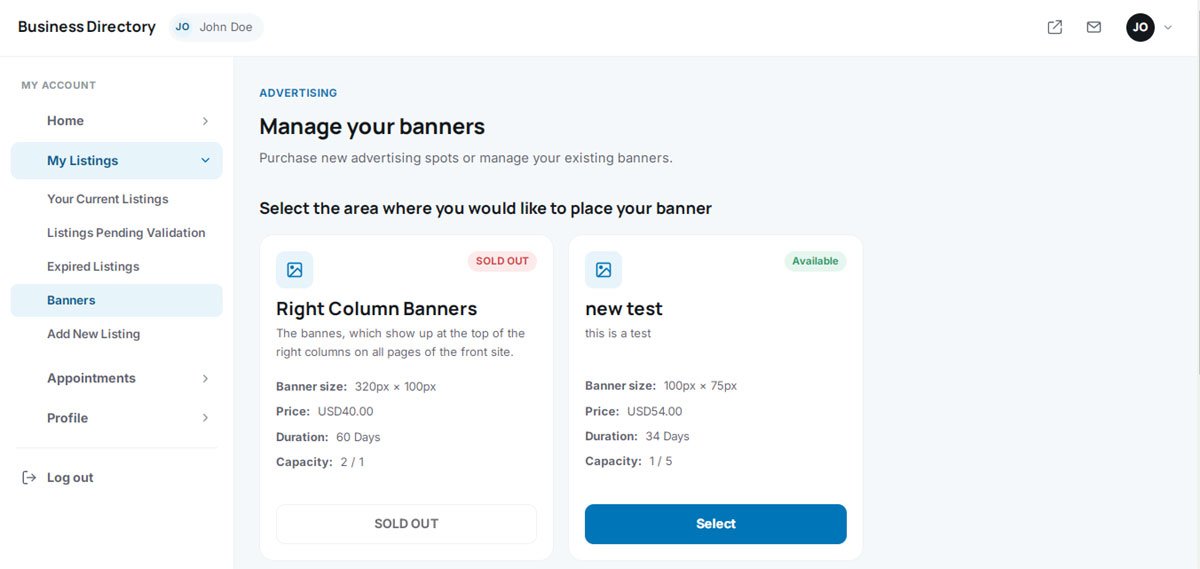
Selling ads manually gets tedious fast, so let advertisers help themselves. With self-service banner ads, vendors see what's available and buy it from their own dashboard.
5. Online booking as a premium feature
Here's one that many directories overlook. Don't just list a business; help it get customers.
If visitors can book appointments directly from a listing, you've moved from "we show your phone number" to "we fill your calendar." That's a very different conversation, and a much easier one to charge for.
Reserve booking for your top plan and watch how quickly clinics and salons start paying attention.
6. Lead generation
Instead of charging for exposure, charge for results. A visitor fills out a request for a quote, and you pass it to relevant businesses for a fee or as part of their plan.
This works especially well for high-value services such as legal help, home renovation or financial advice. Be open with visitors about how it works, and only send decent leads. Businesses forgive a lot, but they don't forgive being sold a lead for someone who only wanted a free opinion on their fence.
7. Sponsored content
Once you've built some authority, businesses will pay to appear in your guides, newsletters or "Business of the Month" features.
Always label sponsored content clearly. Your audience's trust is the whole asset here, and sneaking in paid recommendations is an excellent way to set fire to it. Links in sponsored content should also be marked properly, because Google has opinions about that sort of thing.
8. Affiliate partnerships
Your audience will need things that you don't sell. A wedding directory could recommend insurance. A directory for tradespeople might partner with an invoicing tool.
Affiliate income works best as a modest extra, not as your main plan. Only recommend things you'd be comfortable defending in person, ideally to someone holding a clipboard.
9. Selling the directory itself
This one's for the patient. A directory with solid traffic, steady subscribers and clean data is a real asset that somebody might one day want to buy.
That's one good reason to own your platform and your data. It's hard to sell a business when it mostly consists of a login on somebody else's service. Owning the source code makes your directory a much tidier thing to hand over.
Which should you start with?
Don't try to launch all nine at once. You'll end up with a site that looks like a Formula 1 car, with a sponsor sticker on every available surface and nothing under the hood.
Here's a sensible order:
- At launch: a free listing, a paid listing and featured placement.
- Once owners start claiming: upgrade offers and premium features such as booking.
- Once you have steady traffic: banners and sponsored content.
- Once you're established: lead generation and affiliates.
How much can a directory earn?
Anyone giving you a specific figure is guessing. It depends on your niche, your location, your traffic and how well you sell.
The math itself is simple, though. Take the number of paying businesses, multiply it by your monthly price, and add your other income. Ten clients is a nice hobby. A hundred is starting to look like a job you'd enjoy. In a high-value niche, you won't need as many as you think.
One big thing works in your favor. Once a directory is running, the cost of serving one extra listing is close to zero, so most of each new subscription stays with you. That's especially true if your software isn't taking a monthly cut as you grow.
The real secret
The directories that make money aren't the ones with the cleverest monetization tricks. They're the ones that deliver real customers to real businesses, and can prove it.
If a plumber can see that your site brought them a job last month, renewal is easy. So give vendors clear statistics, show them the results and let the numbers do your selling.
Then, maybe, you can rent the Lamborghini. Although we'd honestly recommend reinvesting in the business.